Why Bookkeeping Feels So Hard for Small Business Owners
Bookkeeping feels hard for small business owners because customer work always outranks admin, receipts arrive faster than sorting, and most software assumes accountant-level knowledge. Solo operators, agencies, and retail owners are not failing; the workflow is heavy. Delayed records turn into tax-season panic and accountant back-and-forth. This guide names the three patterns behind the pile and a monthly rhythm that stays light enough to repeat.
Quick Answer
Why does bookkeeping feel so hard for small business owners? Because it competes with the work that actually pays the bills, receipts arrive faster than anyone can sort them, and most bookkeeping tools were designed for accountants, not for someone trying to run a café, agency, or solo practice. The result is a pile of small tasks that never feels urgent until it suddenly is. The fix is not more willpower. It is a lighter workflow: capture receipts as you go, review once a week, close the month, and send organized records to your accountant.
Why Bookkeeping Feels Harder Than It Should
Why Bookkeeping Feels Harder Than It Should
What screams for attention
- Customer waiting for a reply
- Late delivery or missed deadline
- Invoice that should have gone out
- Hire or ops problem to solve today
What whispers in the background
- Receipt still in your wallet
- Last month's expenses in email
- No one asks until tax season
- Calm later is hard to feel today
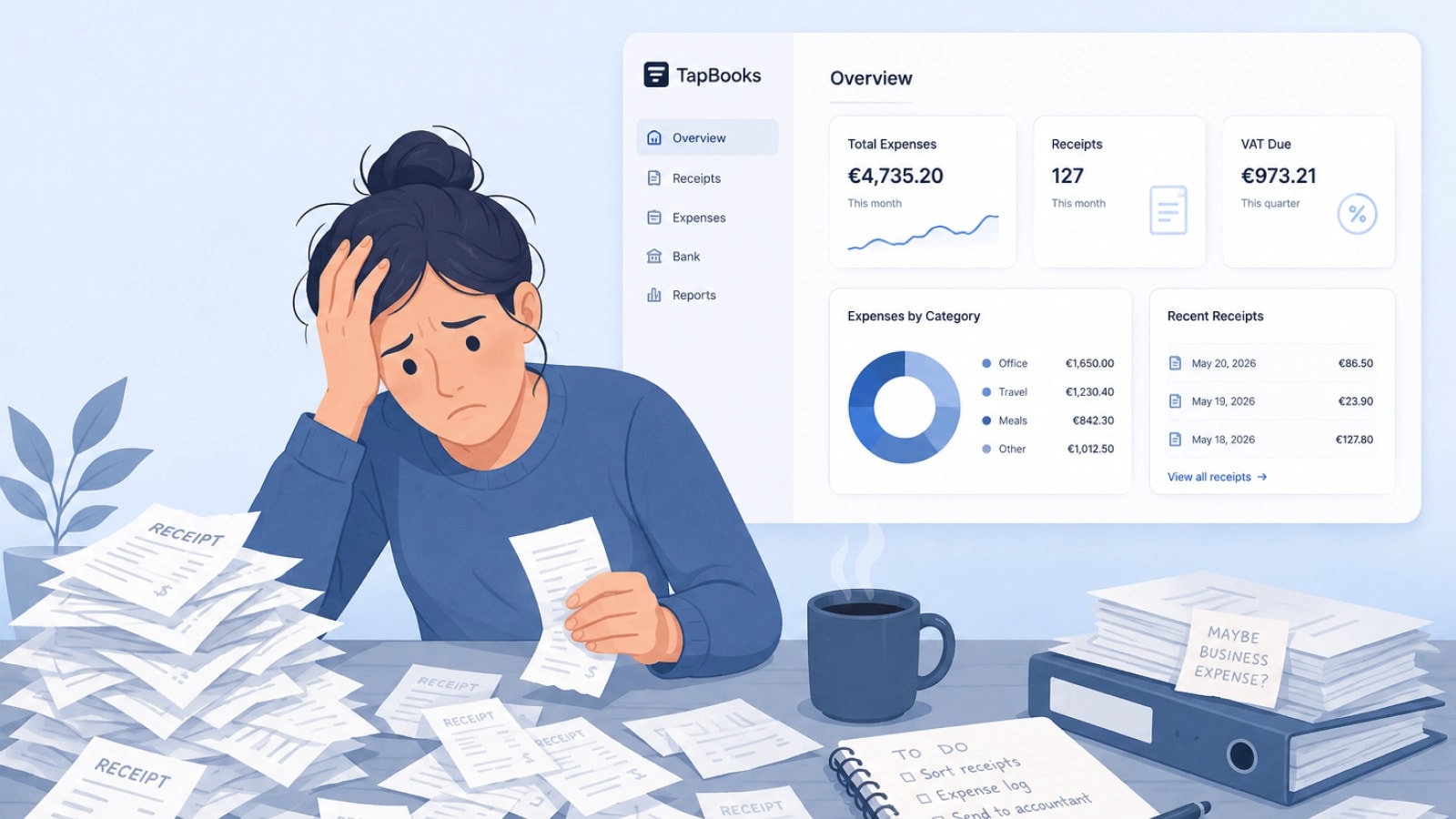
Owners are not lazy. They are running a business. On any given Tuesday, customer problems, deliveries, and invoices win attention because they have deadlines. Bookkeeping whispers until it screams.
The gap gets worse when capture itself is friction. If organizing a receipt means three apps and a category decision before coffee, you defer it. Avoidance is what happens when the task is heavy and the reward is invisible until panic sets in.
The 3 Reasons Small Business Owners Fall Behind
The 3 Reasons Small Business Owners Fall Behind
Three patterns behind bookkeeping delays
Receipts arrive faster than processing
Proof shows up everywhere at once. By catch-up time you are reconstructing a month from memory.
Bookkeeping never feels urgent
Revenue and customers win daily attention. The books slide until a deadline or accountant email lands.
Tools were built for accountants
Most owners want organized receipts and a clean handoff, not a second accounting education.
Most owners who fall behind share the same three patterns. Recognizing them helps because the problem stops feeling mysterious and starts feeling fixable.
Receipts arrive faster than processing. Proof shows up everywhere at once. By catch-up time you are reconstructing a month from memory, not filing one receipt.
Bookkeeping never feels urgent until it is. Revenue and customers come first. The books slide to the weekend, then next month, then "before I talk to my accountant."
Most systems were built for accountants. Most owners want organized receipts and a clean handoff, not a chart of accounts they avoid opening.
What Happens When Bookkeeping Falls Behind
What Happens When Bookkeeping Falls Behind
- 1
Small gaps accumulate
A few receipts deferred becomes a month to reconstruct.
- 2
Uncertainty grows
Cash flow and spending patterns get harder to read.
- 3
Urgency arrives
Tax season, accountant email, or a question you cannot answer.
- 4
Catch-up mode
Evenings searching email instead of running the business.
Falling behind is common. It is also costly in practical ways: tax season stress, missing receipts, scrambling before accountant meetings, and uncertainty about where the money went.
Catch-up bookkeeping is the worst kind. You redo work you could have done in minutes when the purchase was fresh. If you are there now, start with one month, one place, and a list of what is still missing.
A Simple Bookkeeping Workflow for Small Business Owners
You do not need a perfect setup on day one. You need a repeatable rhythm that survives a busy week. The same capture, store, review, and prepare rhythm lives in how to organize business receipts. Use that four-step system instead of inventing a second workflow here.
Capture receipts in seconds
Product Proof
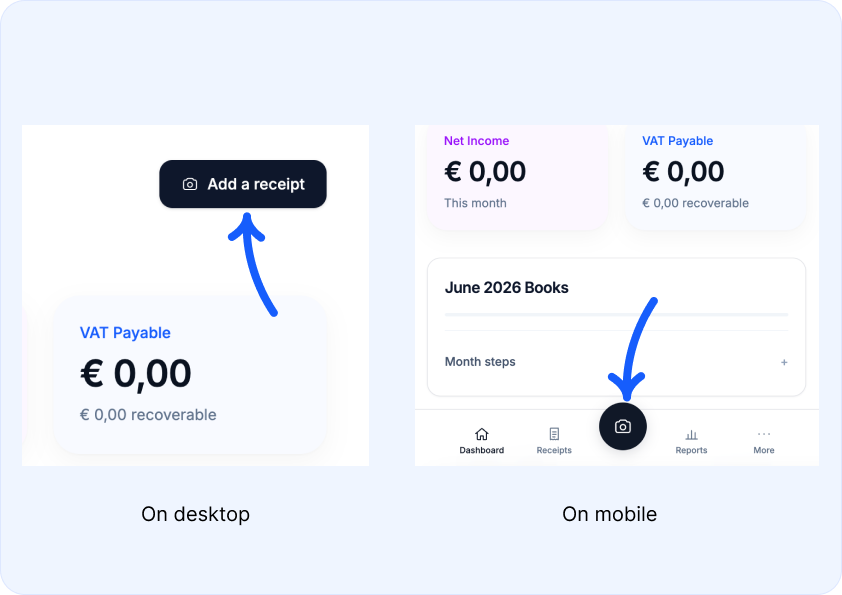
Simple bookkeeping for small business is less about learning accounting and more about making capture and review quick enough to repeat.
Common Bookkeeping Mistakes
Common Bookkeeping Mistakes vs Better Approach
Common mistakes
- Waiting until tax season
- Relying on memory for charges
- Receipts in multiple places
- Mixing personal and business
- Capture without review
Better approach
- Monthly review before deadlines
- Note charges when they happen
- One home for all proof
- Separate records from the start
- Short weekly look at the month
These show up constantly. They are workflow defaults, not moral failures. Waiting until tax season, relying on memory, keeping receipts in multiple places, mixing personal and business, and capturing without review all create the same outcome: a pile that feels heavier every month.
Habits That Actually Stick
The owners who stay current rarely have the most complex systems. They upload receipts as they go, check the month once a week, and fix small gaps while they are still small.
Consistency beats complexity. A simple bookkeeping habit you keep beats a detailed chart of accounts you avoid.
You Still Work With an Accountant
TapBooks is for owners who use an accountant, not instead of one.
Your job is to keep receipts and expenses organized and honest. Your accountant interprets, advises, and files. When you can organize business receipts and send a complete accountant-ready package, you spend less time on back-and-forth email and more time on the business you actually started.
How long to keep records depends on record type and what your accountant needs. See how long to keep business receipts for a practical timeline. When in doubt, ask your accountant.
A Practical Place to Start
If you are behind, shrink the job:
- Pick one month: this one, or the most recent you can still fix.
- Gather receipts where they already live: wallet, email, bank notifications.
- Put them in one place, even if the list is incomplete.
- Write down what is still missing. That list is progress.
You do not need everything perfect before you start. You need a system you will open again tomorrow.
Frequently Asked Questions
The Goal Isn't Perfect Bookkeeping
Most small business owners do not need a complicated accounting system.
They need a simple process that keeps receipts organized, expenses tracked, and records ready when their accountant needs them.
When bookkeeping becomes part of the workflow instead of a monthly emergency, it stops being something you avoid. The wallet receipt gets photographed. March gets closed. The accountant package goes out without a fire drill.
That is what we built TapBooks for: receipt capture, monthly organization, and a straightforward way to send records when the month is ready. Not to replace your accountant. To make the handoff calm.
If you want one place to keep receipts and a clearer monthly rhythm, see how TapBooks works, or start when you are ready and try keeping one week of receipts in a single home.

Founder, TapBooks
Helping small business owners organize receipts, prepare month-end files, and work better with their accountant.
Keep reading
How Long Should You Keep Business Receipts?
Keep business receipts for several years, often three to seven years for everyday purchases and longer for equipment, contracts, or payroll-related records, based on what your accountant needs for your books. You can usually discard paper once you have a clear, readable digital copy and that year's records are complete. Small business owners, freelancers, and contractors ask this when cleaning out files or worrying they will keep too little or too much. This guide gives a practical retention timeline by record type, a direct answer on throwing away paper, and common mistakes that leave you without proof.
How to Categorize Business Expenses
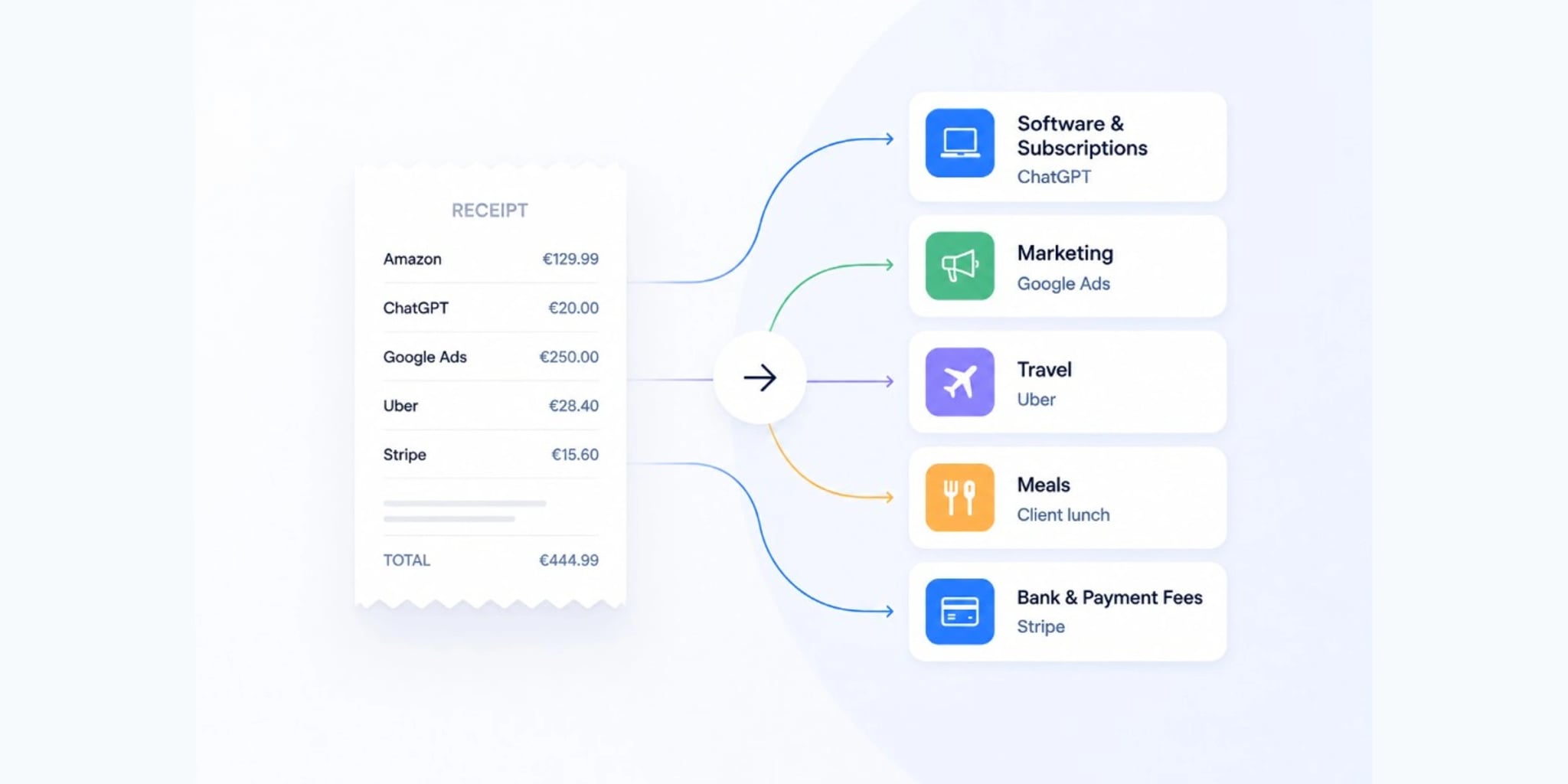
Categorize business expenses by matching each receipt or charge to one of twelve broad labels and reusing the same label for the same merchant every month. Freelancers and small business owners need consistency, not a complex chart of accounts. Inconsistent labels create rework at month-end and confuse exports. This guide includes a copy-paste category list, a merchant lookup table, and a 30-second rule for uncertain charges.

What Receipts Should Small Businesses Keep?
Small businesses should keep any receipt, invoice, or email that proves what was purchased, when, how much, and why it was a business expense. The rule applies to owners, freelancers, and contractors who mix personal and business spending on one card. Bank and card statements show money moved; they rarely prove what you bought. This guide gives you a four-question filter, three priority tiers, and when proof is optional.
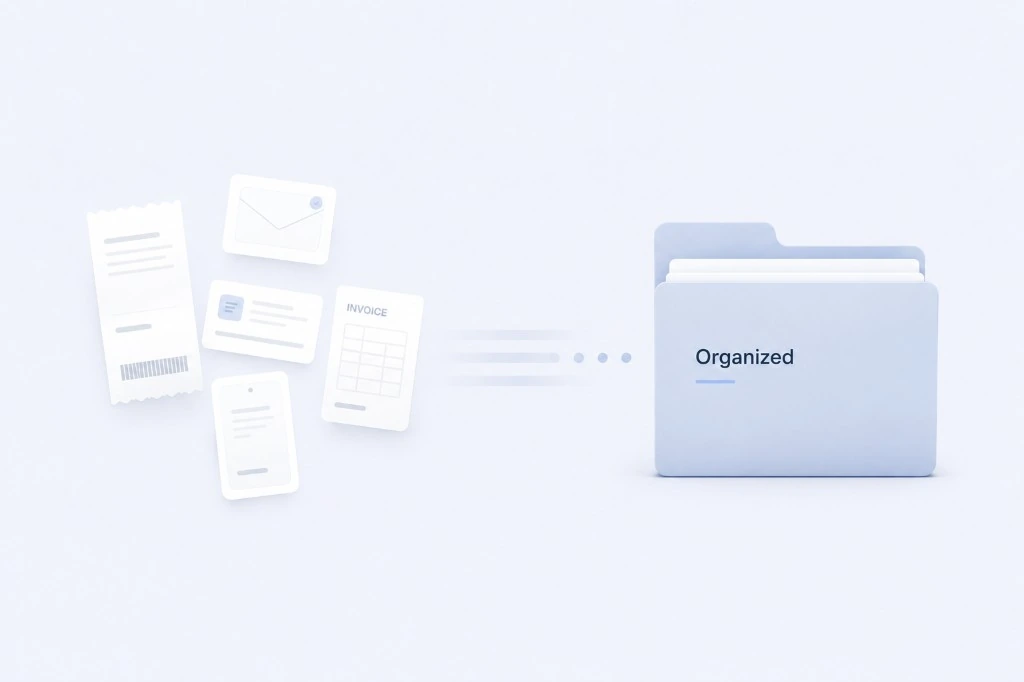
How to Organize Business Receipts
Organize business receipts by capturing proof the same day, storing records in one monthly folder, reviewing once a week, and sending a clean package at month-end. Small business owners and freelancers who hand records to an accountant need findable proof, not perfect categories. Scattered receipts turn one email into hours of reconstruction. This guide breaks down capture, store, review, and prepare with checklists and common mistakes.